

































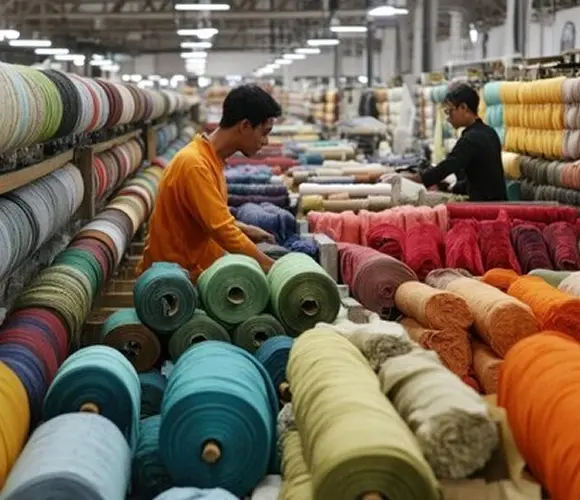







ERP Software for Textile Industry

ERP software for textile industry is designed specifically for spinning mills, weaving units, dyeing houses, garment manufacturers, and textile exporters. Matiyas Solutions helps textile businesses manage production planning, yarn and fabric inventory, dye lot tracking, job work, costing, quality control, and dispatch operations from one integrated cloud ERP platform. Gain complete visibility across the entire textile manufacturing process from raw fiber to finished fabric and garments while reducing wastage, improving efficiency, and increasing profitability.

Request Demo

    TRUSTED BY

    Item 1
    Item 2
    Item 3
    Item 4
    Item 5
    Item 6
    Item 7
    Item 8
    Item 9
    Item 10
    Item 11
    Item 12
    Item 13
    Item 14
    Item 15
    Item 16
    Item 17
    Item 18
    Item 19
    Item 20
    Item 21
    Item 22
    Item 23
    Item 24
    Item 25
    Item 26
    Item 27
    Item 28
    Item 29
    Item 30
    Item 31
    Item 32
    Item 33
    Item 34
    Item 35

    Purpose-Built Textile ERP for Spinning, Weaving, Dyeing, and Garment Manufacturing

    Textile manufacturing is one of the world's most process-intensive industries and one of the most difficult to manage without purpose-built software. A single product's journey from raw fiber to finished garment may pass through spinning, sizing, warping, weaving or knitting, scouring, bleaching, dyeing, printing, finishing, cutting, and stitching; each stage is carried out in different departments, sometimes by different subcontractors, across multiple shifts and machines. At every stage, material consumption, quality outcomes, and production costs are accumulating in ways that disconnected spreadsheets and basic accounting software are constitutionally unable to track.

    ERP software for the textile industry must understand these process flows at a granular level, not as generic manufacturing operations but as the specific yarn-to-fabric-to-garment workflows with their unique inventory units (meters, kilograms, cones, and pieces); their dye lot sensitivity; their job work dependencies; and their margin structures that are simultaneously thin and volatile.

    Matiyas Solutions delivers a fully customized, cloud-native textile ERP system built around the operational reality of textile mills, garment manufacturers, fabric producers, dyeing units, and yarn traders. From production planning through quality control, job work management, export documentation, and financial costing, our ERP brings end-to-end visibility and control to one of manufacturing's most complex environments.

    Industry Challenges

    Challenges in the Textile Manufacturing Industry

    Textile businesses operate with a set of operational complexities that generic ERP implementations consistently fail to accommodate:

    Managing Multiple Production Stages

    Textile production involves spinning, weaving, dyeing, and finishing across multiple departments. Without real-time ERP visibility into work-in-progress, machine capacity, and production flow, delays, bottlenecks, and material wastage increase.

    Yarn and Fabric Inventory Management

    Textile inventory is managed in kilograms, cones, meters, rolls, and pieces simultaneously. Without textile ERP software handling unit conversions and stock tracking accurately, businesses face inventory mismatches, dispatch errors, and stock loss.

    Lot and Batch Tracking

    Dye lot and batch tracking are critical in textile manufacturing to prevent shade variation issues. Without ERP-based lot traceability, manufacturers struggle to track processed fabric batches, resulting in rejected orders and customer complaints.

    Job Work and Subcontracting

    Textile manufacturers often outsource dyeing, printing, stitching, and finishing processes. Without ERP software to manage job work dispatch, subcontractor inventory, approvals, and costing, businesses face delays, material leakage, and overruns.

    Quality Control and Defects Tracking

    Textile quality issues like shade variation, shrinkage, stitching defects, and fabric faults must be tracked at every stage. Without ERP-based quality control and defect tracking, businesses face rejected shipments, wastage, and dissatisfaction.

    Costing and Margin Management

    Textile costing involves yarn usage, dye consumption, labor, job work, finishing, and packing costs. Without ERP software capturing process-wise costing and margin analysis, textile businesses struggle with inaccurate pricing and profit loss.

    ERP Solutions

    How ERP Helps Textile Businesses

    A purpose-configured textile manufacturing ERP creates a connected operational environment where every production stage, every material movement, and every cost element is tracked, planned, and reported in real time:

    End-to-end Production Visibility

    Track every stage of textile production from spinning and weaving to dyeing, finishing, and garment dispatch in one ERP system. Real-time WIP visibility helps manufacturers reduce bottlenecks, improve planning, and prevent delivery delays.

    Inventory and Material Tracking

    Manage yarn, fabric, and garment inventory across kilograms, meters, rolls, cones, and pieces with automated unit conversions. Textile ERP software enables stock visibility, dye lot tracking, and accurate material planning across production and dispatch.

    Automated Planning and Scheduling

    Textile ERP software automates MRP, production planning, and scheduling using sales orders, material availability, machine capacity, batch sizes, and subcontractor timelines to reduce delays, wastage, and production bottlenecks.

    Integrated Business Operations

    Manage job work orders, subcontractor dispatch, in-process inventory, quality checks, and production costing from one textile ERP platform. Gain complete visibility into outsourced operations, material movement, return timelines, and job work costs.

    Cost and Margin Optimization

    Textile ERP software tracks yarn consumption, dye usage, machine costs, labor, and job work charges at every stage. Process-wise costing and variance analysis help manufacturers improve margins, control wastage, and make accurate pricing decisions.

    Quality and Traceability Management

    Textile ERP software manages quality inspections, defect tracking, and dye lot traceability across spinning, weaving, dyeing, and garment production. Improve product consistency, reduce shade variation issues, and maintain textile quality standards.

    Key Features of Matiyas Textile ERP System

    Matiyas ERP delivers advanced production planning, mold tracking, inventory control, quality management, costing, and real-time analytics designed specifically for plastic manufacturing operations. The platform helps manufacturers increase productivity, save waste, and obtain total operational insight in everything from injection molding and extrusion to resin traceability and scrap management.

    Production and MRP Planning

    Manage textile production planning and MRP across spinning, weaving, dyeing, printing, finishing, and garment manufacturing from a single ERP platform. Matiyas Textile ERP helps manufacturers optimize machine capacity, streamline material planning, reduce production delays, and improve process-wise production visibility.

    Features:
    • Process-sequence-based production planning for textile manufacturing
    • MRP for yarn, dyes, chemicals, trims, and accessories
    • Machine capacity and production scheduling management
    • Automatic purchase requisition for material shortages
    • Production planning for spinning, weaving, dyeing, and finishing
    • Work order creation and stage-wise production tracking
    • Batch-wise production scheduling and process monitoring
    • Real-time production visibility and bottleneck identification

    production and MRP planning
    yarn, fabric, and dye lot tracking

    Yarn, Fabric, and Dye Lot Tracking

    Manage yarn, fabric, garment, and dye lot inventory across multiple units of measurement from a single textile ERP system. Matiyas Textile ERP enables accurate stock tracking, dye lot traceability, shade consistency management, and real-time inventory visibility across production, warehousing, and dispatch operations.

    Features:
    • Multi-unit inventory management for yarn, fabric, and garments
    • Inventory tracking in kg, cones, meters, rolls, pieces, and sets
    • Dye lot tagging and batch-wise material traceability
    • Shade consistency management for customer orders and dispatch
    • Lot reservation and allocation for production and sales orders
    • Real-time stock visibility across warehouses and production stages
    • Fabric roll, yarn batch, and garment inventory tracking
    • Dye lot traceability reports for quality control and complaint management

    Batch and Lot Traceability

    Track textile materials and production batches from raw fiber and yarn to finished fabric and garments with complete traceability. Matiyas Textile ERP helps manufacturers maintain lot-level visibility, improve compliance, manage quality issues, and ensure accurate production and dispatch tracking.

    Features:
    • End-to-end batch and lot traceability across textile production
    • Raw material, yarn, fabric, and finished goods lot tracking
    • Production batch tracking by machine, process, and operator
    • Customer order mapping with finished lot traceability
    • Batch-wise production history and material consumption records
    • Export compliance and buyer-specific traceability management
    • Real-time tracking of processed and dispatched textile lots
    • Faster quality investigation and issue resolution through lot records

    batch and lot traceability
    job work and subcontracting management

    Job Work and Subcontracting Management

    Manage textile job work operations, subcontractor processes, material dispatch, and outsourced production tracking from a single ERP platform. Matiyas Textile ERP provides complete visibility into job work inventory, processing status, return timelines, quality checks, and subcontracting costs.

    Features:
    • Complete job work lifecycle management for textile manufacturers.
    • Subcontractor master with process capabilities and rate management
    • Job work order creation and material dispatch challan tracking
    • Gate pass management for outsourced textile operations
    • In-process inventory tracking at subcontractor locations
    • Quality inspection and approval on material return
    • Job work cost capture integrated with production costing
    • Pending material reports and subcontractor performance tracking

    Inventory and Warehouse Management

    Manage textile inventory and warehouse operations across raw materials, WIP, finished goods, and export packing areas from a single ERP system. Matiyas Textile ERP improves stock visibility, warehouse control, fabric grading, lot tracking, and inventory accuracy across textile operations.

    Features:
    • Multi-location warehouse management for textile businesses
    • Inventory tracking for yarn, greige fabric, accessories, and garments
    • WIP inventory management across all production stages
    • Minimum and maximum stock level monitoring with auto-reorder
    • FIFO lot consumption and batch-wise inventory tracking
    • Physical stock verification and inventory count integration
    • Fabric grading and categorization for seconds and irregulars
    • Real-time warehouse visibility and stock movement tracking

    inventory and warehouse management
    quality management system

    Quality Management System (QMS)

    Manage textile quality inspections, defect tracking, shade approvals, and garment audits from a single ERP platform. Matiyas Textile ERP helps manufacturers maintain fabric quality standards, reduce defects, improve traceability, and ensure consistent quality across production stages.

    Features:
    • Four-point fabric inspection for grey and finished fabric
    • Fabric defect tracking by type, frequency, and location
    • Shade approval workflow for dyed and printed fabric
    • Dye lot comparison and shade deviation management
    • Garment quality audits for stitching and measurement checks
    • Customer-wise quality parameters and compliance tracking
    • Complaint management with lot traceability and root cause analysis
    • Real-time quality monitoring across textile production processes

    Procurement and Vendor Management

    Manage yarn, fabric, chemical, and raw material procurement with complete vendor and purchase control from a single ERP platform. Matiyas Textile ERP helps manufacturers streamline purchasing, improve vendor performance, maintain quality standards, and reduce procurement delays.

    Features:
    • Yarn, fabric, dye, and raw material procurement management
    • Vendor-wise price lists and quality grade specifications
    • Purchase order and goods receipt management
    • Fibre testing, yarn count, and fabric quality verification
    • Lead time tracking and supplier delivery monitoring
    • Approved vendor management by material category
    • Vendor performance analysis based on quality, price, and delivery
    • Real-time procurement visibility and material availability tracking

    procurement and vendor management
    financial management and costing

    Financial Management and Costing

    Manage textile accounting, production costing, profitability analysis, and financial reporting from a single ERP system. Matiyas Textile ERP helps manufacturers track process-wise costs, control production expenses, improve pricing accuracy, and monitor business profitability in real time.

    Features:
    • Process-wise costing for textile manufacturing operations
    • Tracking of yarn, dye, chemical, labor, and machine costs
    • Job work costing and overhead allocation management
    • Production order cost sheets with detailed cost breakdowns
    • Actual vs. standard cost analysis and variance tracking
    • Customer-wise and product-wise profitability analysis
    • Export costing with freight, insurance, and documentation expenses
    • Real-time financial reporting and business performance monitoring

    Real-Time Analytics and Reporting

    Monitor textile production, inventory, quality, job work, and financial performance with real-time dashboards and reporting tools. Matiyas Textile ERP provides actionable business insights to improve production efficiency, delivery performance, machine utilization, and operational decision-making.

    Features:
    • Real-time dashboards for textile manufacturing operations
    • Production output vs. plan tracking by process stage
    • Machine utilization and loom efficiency reporting
    • Quality defect analysis and production performance monitoring
    • Material consumption vs. standard usage reporting
    • Job work status and subcontractor performance tracking
    • Inventory visibility and stock movement analytics
    • Financial KPI reporting and management MIS dashboards

    real-time analytics and reporting
    BUSINESS VALUE

    Benefits of ERP for Textile Manufacturers

    A textile ERP improves operational control across production, inventory, costing, and subcontracting workflows. By connecting every stage of manufacturing in one system, textile businesses reduce inefficiencies, improve profitability, and scale operations with greater accuracy and confidence.

    Improved Production Efficiency

    Process-aware scheduling removes bottlenecks between spinning, weaving, and processing stages. Real-time WIP tracking enables quicker intervention when delays occur, reducing missed deadlines, protecting relationships, and preventing cancellations.

    Reduced Material Wastage

    Stage-wise material tracking highlights excess yarn, dye, and chemical wastage against standards, enabling targeted process improvements. Regrading seconds and irregularities into suitable sales channels helps recover value instead of losing it as untracked waste.

    Better Inventory Control

    Systematic lot tracking and customer-wise reservation reduce shade variation complaints, one of the costliest quality failures in fabric manufacturing. Preventing shipment rejections and customer churn helps the ERP deliver strong returns through quality control alone.

    Accurate Costing and Pricing

    Process-wise cost capture replaces estimated costing that causes margin erosion. Manufacturers gain accurate cost visibility per meter, piece, customer, and production batch, enabling confident pricing, stronger negotiations, and better profitability decisions.

    Real-time Decision-Making

    Complete tracking of materials sent to and received from job workers, along with process-wise costing, reduces discrepancies and cost overruns in subcontracting. Pending material reports prevent follow-up delays and losses that often go unnoticed.

    Scalable Business Operations

    As production volumes, customer demands, and export compliance requirements grow, ERP automation manages operational complexity without increasing back-office workload. Textile businesses scale efficiently on a system designed to support long-term growth.

    Who This ERP Is Built For

    Our textile ERP is built for manufacturers and processors across the textile value chain who need better production control, accurate costing, inventory visibility, and streamlined operations. From spinning mills to garment exporters, the system adapts to industry-specific workflows and scale.

    Textile Mills

    Vertically integrated mills manage spinning, weaving, and processing in one system, with complete tracking from fiber procurement to finished fabric dispatch and accurate cost capture at every stage.

    Garment Manufacturers

    Garment manufacturers manage fabric sourcing, trims, cutting, stitching, quality checks, job work, and export documentation in one ERP with real-time visibility and control.

    Fabric and Yarn Producers

    Weaving, knitting, and spinning units use our ERP for machine scheduling, greige production, quality checks, inventory control, and seamless management of trading and manufacturing operations.

    Dyeing and Processing Units

    Dyeing, printing, and finishing units use our ERP for batch tracking, recipe management, shade approval, chemical inventory, utility monitoring, and accurate job work billing.

    WHY MATIYAS SOLUTIONS

    Why Choose Matiyas Solutions for Textile Industry ERP

    Matiyas Solutions delivers a textile ERP built around the realities of textile manufacturing, processing, and export operations. The system helps textile companies run with more precision, efficiency, and long-term scalability because of its industry-specific workflows, scalable deployment, compliance-ready features, and professional implementation support.

    Our textile ERP is configured around the process sequences, inventory units, dye lot management, job work structures, and costing logic that are specific to the textile industry. Loom efficiency, shade approval workflows, four-point inspection, and yarn count inventory are not custom additions to a generic ERP. They are built-in capabilities.
    From a 20-loom weaving unit to a vertically integrated textile group with spinning, processing, and garment operations, our ERP scales without architectural limits. Start with the modules your business needs most urgently and expand the system progressively as your operation grows.
    For textile exporters managing GST e-invoicing, export invoice documentation, shipping bill data, buyer-specific packing lists, and quality certificates, our ERP handles the export documentation workflow alongside production and financial management in one integrated system.
    Our implementation team understands the difference between ring-spun and open-end yarn for inventory purposes, why dye lot sensitivity makes lot traceability non-negotiable, and how job work management differs fundamentally from standard subcontracting in other industries. This domain knowledge translates into faster, higher-quality implementation and better adoption by your production team.
    Why Choose Matiyas

    Ready to Transform Your Textile Manufacturing Business with ERP?

    Matiyas Solutions is ready to deploy a fully configured textile ERP system for your operation with the process-chain management, dye lot traceability, job work control, and costing precision that your business needs to grow profitably.

    Frequently Asked Questions — ERP Software for Textile Industry

    ERP for the textile industry is an enterprise resource planning system specifically configured for the operational workflows of textile manufacturing businesses, including spinning mills, weaving and knitting units, dyeing and processing operations, garment manufacturers, and fabric traders. Unlike generic manufacturing ERP, a textile-specific ERP manages multi-unit yarn and fabric inventory (kilograms, meters, cones, and pieces); dye lot tracking and shade approval; multi-stage production planning across spinning, weaving, and finishing; job work and subcontracting management; and process-wise cost capture from raw fiber through finished product. Matiyas Solutions’ textile ERP is configured around these workflows from day one.

    ERP helps textile manufacturers by integrating the full production chain from raw material procurement through every production stage to finished goods dispatch and customer invoicing in a single, connected platform. For textile businesses specifically: MRP prevents raw material stockouts while avoiding overstocking; process-aware scheduling reduces production bottlenecks; dye lot tracking eliminates shade variation shipments; job work management provides visibility into subcontracted material and costs; and process-wise cost capture gives manufacturers accurate per-unit costs for confident pricing and margin management.

    Yes. Matiyas Solutions’ textile ERP manages the full production chain, including job work dispatch and receipt workflows for contract dyeing, printing, and finishing; dye lot management with shade approval; four-point fabric inspection; batch-wise production recording for dyeing operations; and process-sequence scheduling that respects the dependencies between scouring, dyeing, printing, and finishing stages. Job work material balances at subcontractor locations and costing integration ensure complete control over subcontracted operations.

    Textile ERP implementation cost depends on company size, number of production stages and modules, job work complexity, integration requirements (loom monitoring, barcode, e-commerce), and export documentation needs. Matiyas Solutions offers scope-based, transparent pricing for textile SMEs and mid-market businesses without the licensing costs of tier-one ERP vendors. Contact us for a detailed assessment and proposal based on your specific textile operation.

    Yes. Matiyas Solutions’ modular textile ERP is as relevant for a 30-loom weaving unit or a dedicated dyeing unit as for an integrated textile mill. Small businesses can begin with the modules that address their most pressing operational challenges, typically inventory management, production tracking, and job work control, and expand to quality management, advanced costing, and analytics as the business grows. The platform scales without re-implementation.

    Let’s Take Your Enterprise to
    a New Level

    Want to know how our customized ERP solutions work for your business?

    Request Demo
    customized ERP solutions
    Testimonial

    Your satisfaction is our success

    This is what our clients speak about our services and solutions-

    Video Testimonial

    Your satisfaction is our success

    This is what our clients speak about our services and solutions-

    Delighted

    Our Top Clients

    Item 1
    Item 2
    Item 3
    Item 4
    Item 5
    Item 6
    Item 7
    Item 8
    Item 9
    Item 10
    Item 11
    Item 12
    Item 13
    Item 14
    Item 15
    Item 16
    Item 17
    Item 18
    Item 19
    Item 20
    Item 21
    Item 22
    Item 23
    Item 24
    Item 25
    Item 26
    Item 27
    Item 28
    Item 29
    Item 30
    Item 31
    Item 32
    Item 33
    Item 34
    Item 35