Introduction
The manufacturing industry is evolving rapidly, and small businesses are under constant pressure to keep up with customer demands, rising costs, and market competition. For many small manufacturers, managing production schedules, controlling inventory, and ensuring product quality with limited resources is a daily struggle. Relying on spreadsheets or disconnected software tools often leads to inefficiencies, errors, and missed opportunities.
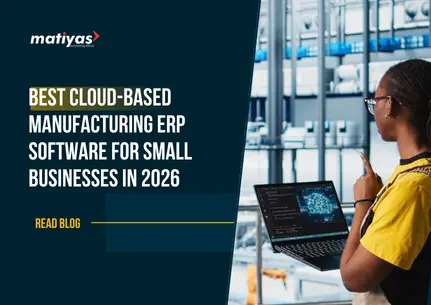
This is where cloud-based manufacturing ERP software for small businesses makes all the difference. By bringing together production planning, inventory control, finance, customer management, and supply chain operations in one platform, ERP empowers small manufacturers to compete with larger companies without the heavy cost of traditional IT systems.
In this blog, we’ll explore how Manufacturing ERP software is transforming small businesses, the benefits it offers, the features you should look for, and why adopting a cloud-based ERP is the smartest step toward growth and long-term success.
Why Small Businesses Need Manufacturing ERP
Many small manufacturers still think ERP solutions are designed only for large enterprises. In reality, today’s cloud-based ERP software manufacturing is affordable, flexible, and built to meet the needs of small and medium-sized businesses.
Here’s why ERP is becoming essential for small manufacturers:
Centralized operations: ERP connects finance, production, sales, and supply chain, eliminating silos.
Accurate inventory control: Real-time tracking helps avoid costly stockouts and overstocking.
Cost savings: Automated workflows reduce waste, errors, and unnecessary expenses.
Scalability: ERP grows with your business, supporting expansion without big IT costs.
Regulatory compliance: Ensures product quality and helps meet industry standards.
By implementing the best ERP for small manufacturing businesses, companies can free up valuable time, minimize errors, and focus more on innovation and customer satisfaction.
Key Features of Manufacturing ERP for Small Business
A manufacturing ERP for small business is designed to simplify complex processes and give owners better control over operations. Unlike traditional systems, it combines multiple functions into a single platform, making it easier for small manufacturers to stay competitive. Below are the key features:
1. Production Planning and Scheduling
Helps manufacturers plan resources, manage work orders, and schedule production efficiently to ensure on-time deliveries and minimal downtime.
2. Inventory and Warehouse Management
Tracks raw materials, finished products, and work-in-progress (WIP) in real time. This prevents stockouts, reduces wastage, and optimizes inventory levels.
3. Quality Management
Ensures products meet required standards with built-in quality checks, inspections, and compliance monitoring.
4. Finance and Accounting Integration
Automates accounting processes like billing, payroll, and expense tracking while connecting them directly to production and inventory data.
5. Customer Relationship Management (CRM)
Manages customer inquiries, quotations, and sales orders in one system. It improves customer service and helps maintain long-term relationships.
6. Reporting and Analytics
Provides real-time dashboards and customizable reports to support data-driven decision-making.
7. Cloud-Based Access
Allows teams to access ERP from anywhere, anytime, using secure cloud servers—ideal for businesses with remote or distributed teams.
Benefits of Cloud-Based Manufacturing ERP for Small Businesses
1. Reduced IT Costs
Cloud-based ERP eliminates the need for expensive servers, hardware, and dedicated IT teams. Small manufacturers can access enterprise-grade software at an affordable subscription cost.
2. Remote Accessibility
With cloud ERP, owners and employees can access data anytime, anywhere. This flexibility is especially useful for businesses with multiple locations or remote teams.
3. Faster Implementation
Unlike traditional on-premise systems, cloud ERP can be deployed quickly. Small businesses can start using it within weeks instead of waiting months for setup.
4. Automatic Updates
The system is always up to date with the latest features and security patches, ensuring small businesses don’t have to worry about maintenance or upgrades.
5. Scalability and Flexibility
As your company grows, you can easily add new users, modules, or functionalities without major costs. Cloud ERP scales with your business.
6. Improved Collaboration
ERP connects departments such as finance, production, sales, and supply chain. Real-time data sharing enables teams to collaborate more effectively.
7. Enhanced Decision-Making
With accurate reporting and real-time insights, small manufacturers can make faster, data-driven decisions that improve efficiency and reduce risks.
For a real-world example, see this ERPNext inventory case study .
8. Better Customer Experience
By integrating CRM, production, and inventory data, ERP ensures accurate order processing, timely deliveries, and improved customer satisfaction.
Example:
A small furniture manufacturer using production ERP software can monitor raw materials, track production progress, and manage customer orders in one platform. This reduces delays, cuts costs, and enhances overall productivity.
Challenges Small Manufacturers Face Without ERP
Without a manufacturing ERP software, many small businesses face recurring challenges such as:
Manual errors in production planning.
Inefficient inventory control, leading to wastage or shortages.
Delays in order delivery, affecting customer trust.
Rising operational costs due to inefficiencies.
Lack of visibility into real-time data and financial performance.
These issues restrict small manufacturers from scaling operations and competing effectively with larger players.
Choosing the Best ERP for Small Manufacturing Business
Selecting the best ERP for small manufacturing business is a critical decision. The right ERP can streamline operations, reduce costs, and prepare your company for future growth. However, with so many options available, it’s important to choose a system that matches your unique needs. Businesses with more specialized requirements may also consider manufacturing software development services to create solutions that fit their workflows and operational processes.
Here are the key factors to consider when evaluating small business ERP manufacturing solutions:
1. Industry-Specific Features
Not every ERP is built for manufacturing. Look for manufacturing ERP software that supports core processes like production scheduling, inventory control, quality management, and supply chain operations.
2. Ease of Use
Small businesses often don’t have the luxury of long training sessions. The best small business manufacturing software should have a simple, user-friendly interface so your team can adapt quickly.
3. Cloud Deployment
Cloud-based ERP offers flexibility, lower IT costs, and remote access. For small businesses, it ensures scalability without the need for expensive infrastructure.
4. Integration Capabilities
The best ERP systems for small manufacturing can integrate seamlessly with CRM, eCommerce platforms, accounting tools, and third-party applications. This ensures smooth data flow across all business functions.
5. Customization and Flexibility
Every manufacturing business has unique requirements. A good ERP should allow customization to fit your workflows without being overly complex or costly.
6. Cost-Effectiveness
For small businesses, budget is always a concern. The best manufacturing software for small business should deliver value for money providing essential features without unnecessary add-ons.
7. Vendor Support and Reliability
Choose a provider with proven expertise in the manufacturing industry. Reliable support and training are essential for maximizing ROI on your ERP investment.
Role of Production ERP Software in Small Businesses
In the competitive manufacturing landscape, small businesses need to manage production efficiently while keeping costs under control. This is where Production ERP Software plays a vital role. It integrates all production-related processes planning, scheduling, resource allocation, and quality control into a single platform, helping small manufacturers achieve higher efficiency and profitability.
1. Streamlining Production Planning
Production ERP Software enables small businesses to create accurate production schedules based on demand forecasts, available resources, and current inventory. This reduces downtime, avoids material shortages, and ensures on-time delivery.
2. Better Resource Utilization
For small manufacturers, every machine and labor hour counts. With manufacturing ERP for small business, companies can allocate resources effectively, reduce idle time, and improve shop floor productivity.
3. Real-Time Inventory Management
Production ERP connects with inventory modules to track raw materials and finished goods in real time. This integration prevents stockouts, overstocking, and wastage common challenges faced by small businesses.
4. Improved Quality Control
Maintaining consistent product quality is essential for small businesses to retain customers. Manufacturing ERP software ensures quality checks are embedded into each stage of the production process, minimizing errors and rework.
5. Cost Reduction and Efficiency Gains
By automating manual tasks and providing visibility into production costs, small business ERP manufacturing solutions help reduce operational expenses. This leads to better margins and increased competitiveness.
6. Data-Driven Decision Making
With dashboards and analytics, Production ERP Software empowers small businesses with real-time insights. Owners and managers can track performance, monitor bottlenecks, and make informed decisions that improve overall production efficiency.
Future of Manufacturing ERP for Small Businesses
Looking ahead, the future of manufacturing ERP software lies in advanced technologies such as:
AI and machine learning for demand forecasting and smarter supply chain decisions.
IoT integration for predictive maintenance and real-time equipment monitoring.
Mobile ERP apps for instant access to production and financial data.
Global scalability with cloud solutions that support international expansion.
These innovations make ERP a powerful growth engine for small businesses.
Conclusion
Small manufacturers no longer need to rely on outdated tools or complex systems that drain resources. With cloud-based manufacturing ERP software for small businesses, they can manage production, finances, inventory, and customer relationships in one efficient platform.
Whether you need the best ERP for small manufacturing business, production ERP software, or the best small business manufacturing software, the right ERP solution can help you streamline processes, reduce costs, and achieve long-term success.
At Matiyas Solutions, we provide tailored manufacturing ERP software designed specifically for small businesses. Our cloud-based ERP helps you simplify operations, boost productivity, and scale with confidence.
FAQ's








 "I am quite happy with the ERP solution provided by Matiyas. Before we implemented their system, our organization was struggling with inefficient processes and fragmented data. Their customized ERP solution not only streamlined our workflows but also provided real-time insights into our operations. The customer support from Matiya's Team has been exceptional throughout the journey."
 "Matiyas offered us a functionally strong and automated solution to address the end-to-end needs of our business operation. This solutions will be able to scale and grow our business and it will surely reduce manual interventions."
 "I wanted to thank you Matiyas team to set-up the ERP system based on our business process. The assistance was invaluable in helping my company get as we requested. We sincerely appreciate your efforts and thanks again Matiyas team to provide us a best solution with the erp system."

 "The implementation of the Matiyas ERP solution has revolutionized our workflow. The automation of previously manual processes has not only saved us time but also significantly reduced errors. It’s like having an extra set of hands on our team, streamlining operations and boosting productivity"



 "Our company is very new to ERP, we tried to implement ERP by ourselves, however along the way we found struggles as we are very new. We are lucky HasanAli from Matiyas helped us in many ways, from a simple question to very complex developments and deployments. Rates are reasonable too! We are happy that Matiyas is there to help us."
 "The folks at Matiyas Software are the best. They're skilled, work quickly and professionally, and were able to tailor ERP to our exact specifications. Would use them again."
 "Very knowledgeable and prompt and professional. I highly recommend Matiyas for any ERP customizations."